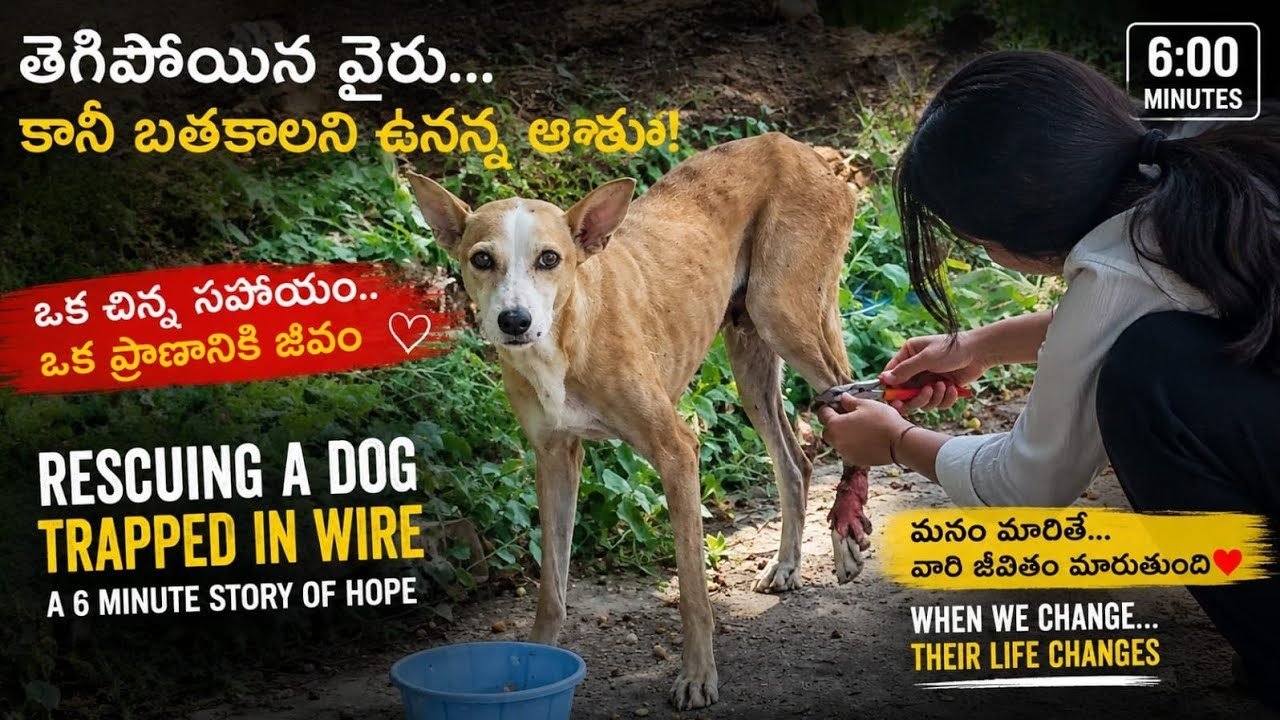
A wire cut out of a leg
Rescue & treatment · 6 min

Anna Shelters is the daily work of Jyothi Animal Welfare — a registered society feeding, treating, sterilising and defending the community dogs of Khammam, and teaching a generation of children to see them.
In Telugu, anna (అన్నం) means food. It is also what you call an elder brother. That is the whole idea behind this work: you feed the ones you belong to.
Khammam's street dogs were born here. They know the lanes, the shopkeepers, the school bells. Removing them does not make a city safer — caring for them properly does. That is not sentiment; it is the finding of the World Health Organization, of India's own Animal Birth Control Rules, and of every city that has actually solved this.
India recorded 37,17,336 dog bite cases in 2024 in official government surveillance. A national ICMR study published in The Lancet Infectious Diseases estimates the true figure is closer to 9.1 million animal bites and around 5,726 human rabies deaths every year — the gap is a reporting failure, not a mystery.
In Telangana alone, 1,21,997 dog bite cases were recorded in 2024, up from 92,924 in 2022. Rabies is 100% preventable and, once symptoms begin, 100% fatal. More than one in five bite victims in India never receive a single dose of vaccine.
The dogs are suffering too. In January 2026, in the weeks after the panchayat elections, around 1,430 dogs were killed across Telangana — poisoned with a paralytic drug, buried in pits, in nine districts. FIRs were filed. Nothing about the street got safer.
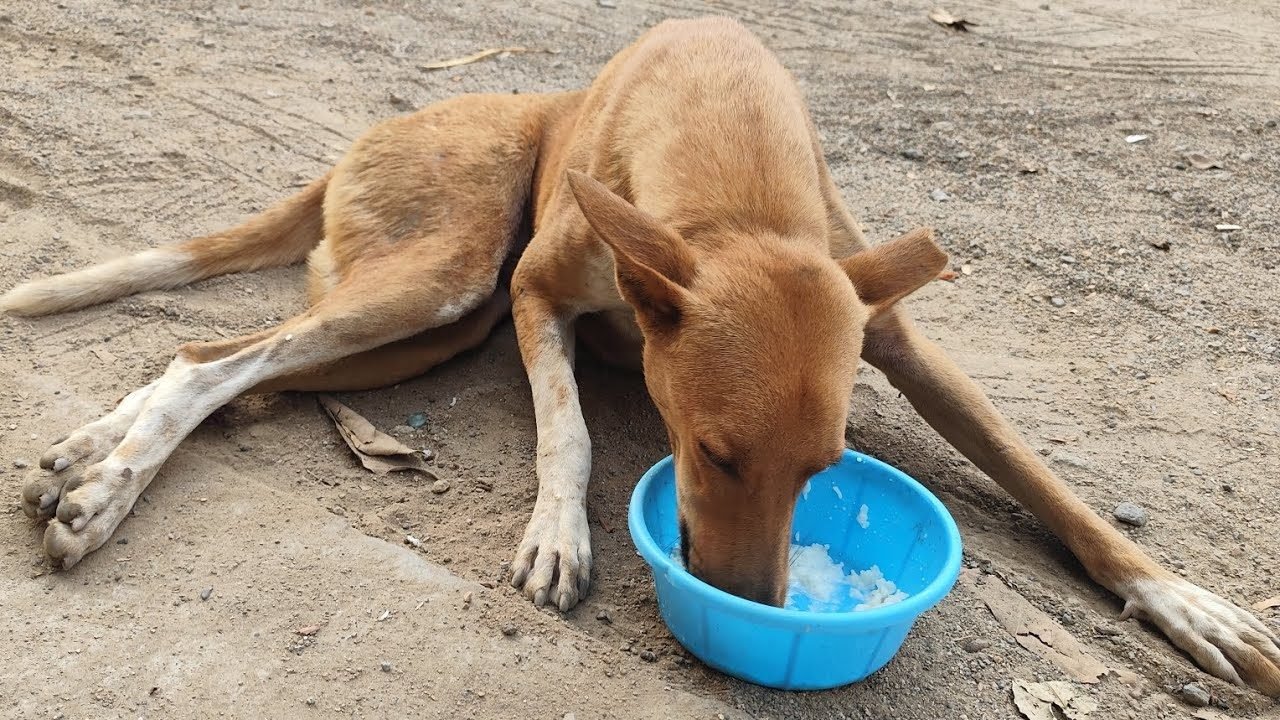
The World Health Organization is unambiguous: “Culling free roaming dogs is not effective in controlling rabies.” When dogs are removed, the food, shelter and territory that supported them stay exactly where they were — so new, younger, unvaccinated dogs move in within months. Public health researchers call it the vacuum effect. Every rupee spent on culling buys a more dangerous street six months later.
It is unglamorous, it takes years, and it is the only method with a track record anywhere in India.
Mission Rabies vaccinated 4,26,119 dogs between 2013 and 2019. Human rabies deaths fell from 17 in 2014 to zero in 2018 and 2019. Canine rabies cases dropped 92%. No culling was used. Nature Communications, 2022.
Over 23 years of sterilise-and-return, Jaipur's roaming dog population halved, puppies fell from 19% of the population to 2%, and an estimated 360,000 bites and 500 human deaths were averted. Every $1 spent saved $8.50 in bite treatment alone.
Sikkim's SARAH programme has sterilised over 37,500 dogs and holds vaccination coverage above the 70% herd-immunity threshold. The state has recorded no human rabies death since 2006.
Sources: Gibson et al., Nature Communications 13:2788 (2022) · Larkins et al., Preventive Veterinary Medicine 183 (2020) · Global Alliance for Rabies Control · WHO Rabies Fact Sheet.
No campaigns. No one-off drives. The dogs of Khammam eat every day, so we work every day.
Cooked rice and protein, delivered on a fixed route to fixed feeding spots, every day of the year — including through summer, monsoon and festival closures.
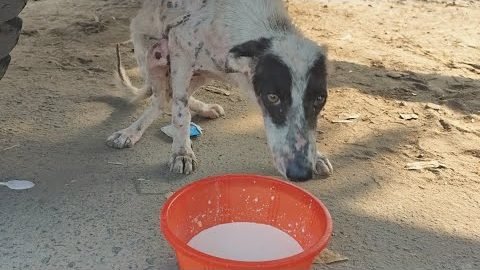
Read moreWire injuries, maggot wounds, road accidents, mange, tick fever, paralysis. We treat on site where we can and move the critical cases into shelter care.
Read moreThe only humane way to bring numbers down and rabies to zero. We identify, catch, transport, and return dogs to the exact street they came from — as the ABC Rules require.
Read moreEmpathy is learned. We run compassion sessions in schools and help colonies set up their own feeding spots, so care outlives any one volunteer.
Read more
Srinivas is the President of Jyothi Animal Welfare and the reason this exists. Most days start before the city does — cooking, loading the vehicle, and driving a route he has not missed in years.
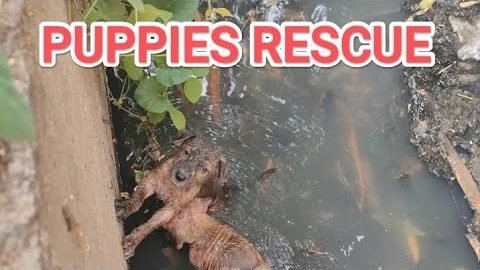
He does something unusual for this work: he films all of it. More than 220 videos on his channel, most of them in Telugu, most of them under five minutes. A wire cut out of a leg. A paralysed dog carried into shelter. A puppy pulled out of a drain. A dog he named Sweety, and the day her kidneys failed.
It is not polished. That is the point. It is a public, timestamped record of what happens on Khammam's streets — and it has quietly built a community of people who now watch out for the dogs on their own lanes.
Filmed by Srinivas, on the street, as it happened.
On 19 May 2026 the Supreme Court of India delivered its final judgment in the stray dog case. It ordered at least one working Animal Birth Control centre in every district of every state, adequate anti-rabies medicine everywhere, and compliance reports to the High Courts.
It also narrowed where dogs may be returned, and permitted euthanasia in strictly defined cases — rabid, incurably ill, or demonstrably dangerous dogs, after veterinary assessment. It did not authorise random killing or removal, and the Court said so again on 25 May 2026.
Knowing exactly what the order says protects both people and dogs. We have written it out plainly.
The Court directs Delhi-NCR dogs be picked up and not released. Nationwide alarm follows.
A three-judge bench restores sterilise–vaccinate–return, and orders designated feeding spots in every municipal ward.
Schools, hospitals, bus stands and railway stations to be fenced and cleared; nodal officers appointed.
One ABC centre per district ordered nationwide. Compliance report due to the Supreme Court on 17 November 2026.

Globally, 40% of rabies victims are children under 15. Children are bitten more often because they run, shout, and reach for animals they don't understand — and because nobody ever showed them how.
The Supreme Court's November 2025 order directed the Ministry of Education to have schools run awareness sessions on safe behaviour around animals. We were already doing it.
Our school sessions teach two things at once: how not to get bitten, and why the dog outside your gate deserves your kindness. Those are the same lesson.
Our long-term goal is to make ourselves less necessary.
We help residents' associations set up a designated feeding spot the way Rule 20 of the ABC Rules requires — away from children's play areas and entrances, at a fixed time, kept clean. It ends the feeder-versus-neighbour fights before they start.
One person per lane who knows their dogs by name, notices a limp on day one instead of day ten, and has our number. Early reporting is the single cheapest intervention in animal welfare.
Most "dog problems" are actually people problems. We sit with complainants, not against them — and we take genuine safety concerns seriously, because a programme that ignores them will be shut down.
Rice, chicken, oil, fuel for the route. Deworming tablets. A tube of ointment. Sterilisation for one female dog, which prevents dozens of puppies born to die on a road. It is not abstract — it is a grocery bill, and it comes every day.
Jyothi Animal Welfare is a society registered under the Telangana Societies Registration Act, 2001 — Registration No. 13 of 2021, Registrar of Societies, Khammam. All registration documents are published on our transparency page.