Five things, done properly, forever
There is no clever shortcut in street animal welfare. There is only showing up — with food, with medicine, with a surgical schedule, and with the patience to do it again tomorrow.
Feeding rounds, 365 days
A hungry dog is a dangerous dog. It scavenges in bins, fights over scraps, guards a food source aggressively, and is far more likely to snap at a child holding a snack. Feeding is not indulgence — it is bite prevention.
A well-fed street dog is also catchable. You cannot sterilise or vaccinate an animal that will not come near you. Every dog on our route knows the vehicle, and that single fact is what makes the medical work possible at all.
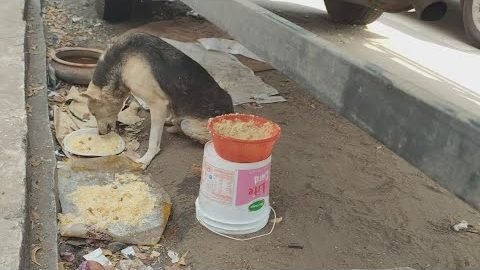
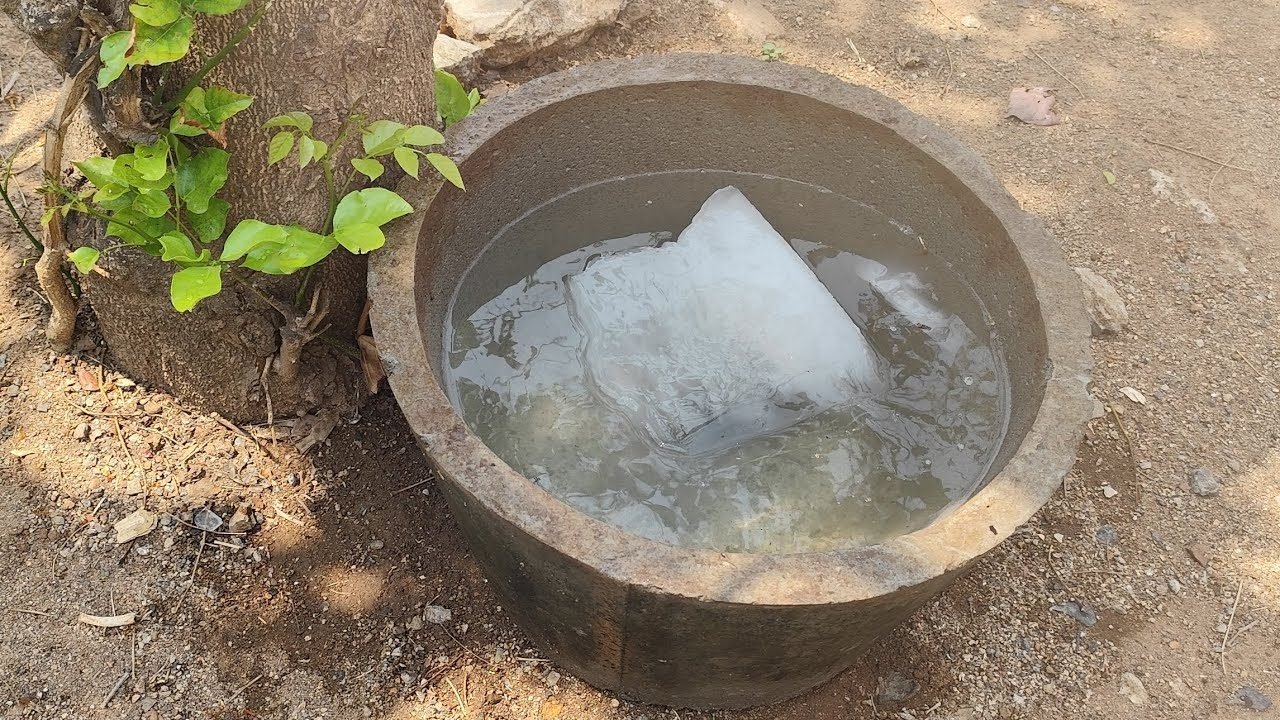
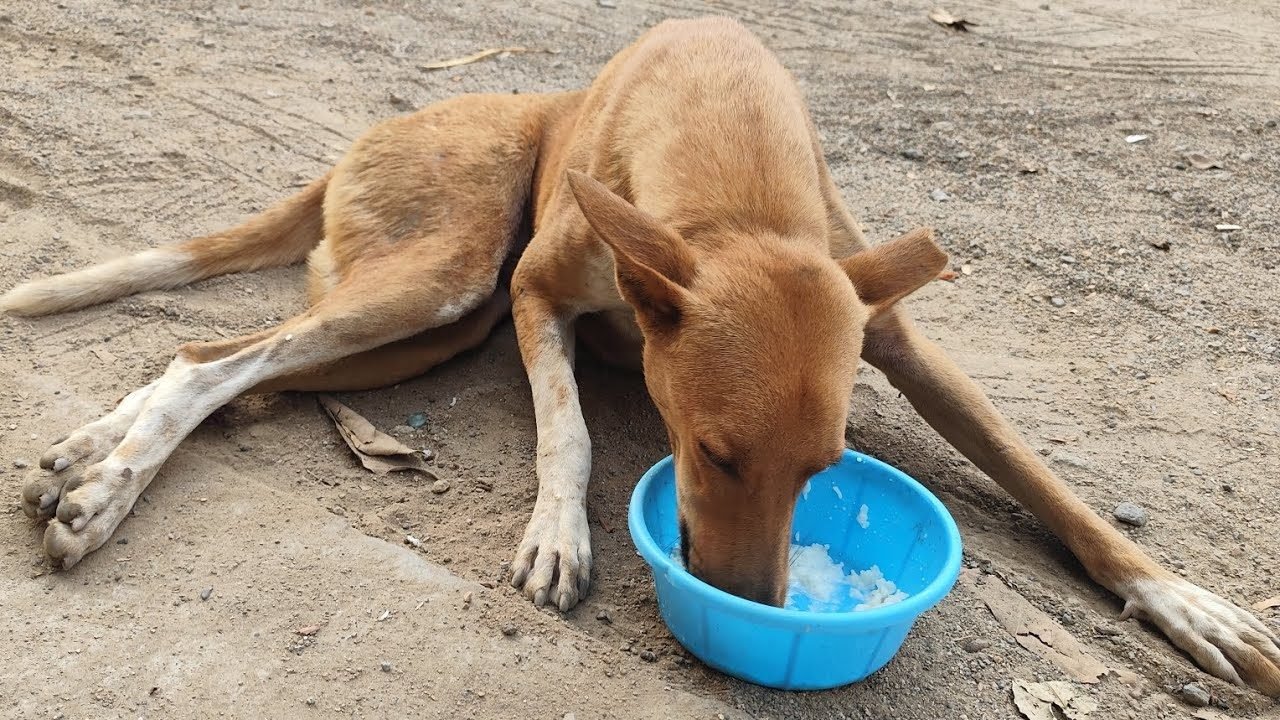
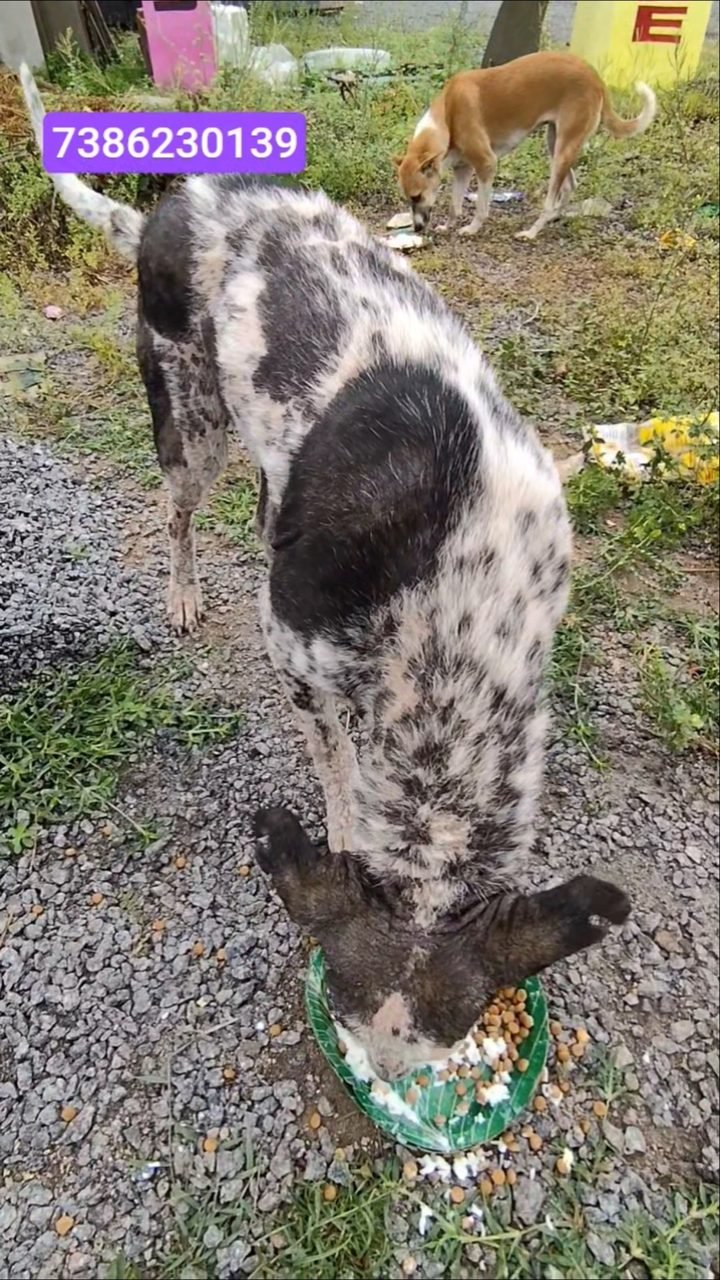
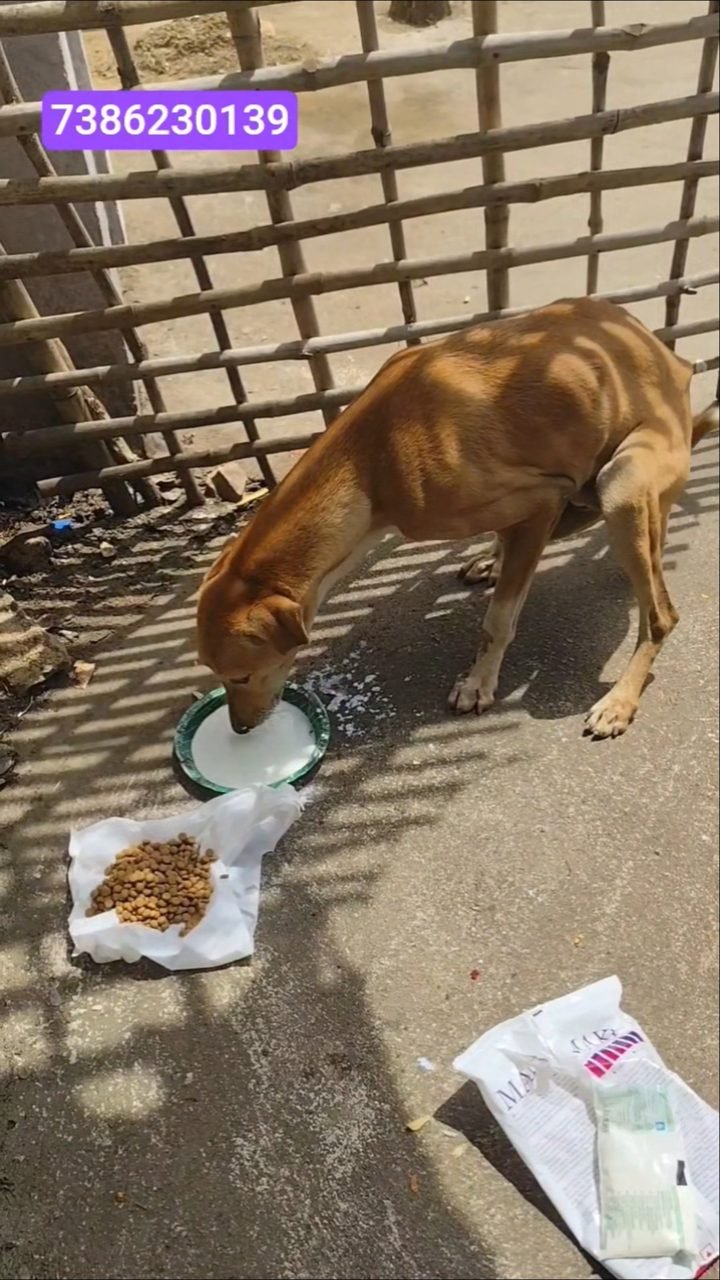
We cook and deliver on a fixed route to fixed spots, at fixed times. Rice with protein. Milk for nursing mothers and puppies. Through summer, we refill stone water bowls and drop in ice — Khammam crosses 44°C in May, and dehydration kills more street dogs than most people realise.
Why fixed feeding spots matter legally
Rule 20 of the Animal Birth Control (Dogs) Rules, 2023 places the responsibility for arranging community animal feeding on the resident welfare association or local body representative, and requires mutually agreed designated feeding spots — kept away from children's play areas, entrances and staircases, at agreed times, with no littering. The Supreme Court's order of 22 August 2025 reinforced this and directed municipal authorities to create dedicated feeding spaces in every ward.
Doing it the correct way protects the feeder, the neighbours and the dogs. We help colonies set this up properly.
Rescue and treatment
The call comes at any hour. A dog hit by a bike on the bypass. A puppy that fell into a storm drain. A plastic wire that has grown into a leg over months. Mange so advanced the animal has no coat left.
Where we can, we treat on the street — it is faster, less traumatic, and the dog stays in its own territory, which is where the law says it belongs. Wound cleaning, maggot treatment, antibiotic and anti-inflammatory courses, deworming, tick control, ear infections, skin disease. We return daily until the course is finished.
The critical cases come in: fractures, spinal injuries, distemper, tick fever, tumours, and the dogs nobody else will take — the paralysed ones, who need a clean surface, turning, and feeding by hand.
What we treat most
Road accidents · maggot wounds · embedded wire and rope · mange and severe skin disease · tick fever · parvovirus in puppies · bite injuries from dog fights · malnutrition
What we cannot do alone
Complex orthopaedic surgery, imaging, and intensive care need a proper veterinary hospital. Building reliable access to that for street animals in Khammam is our central goal.
Sterilisation and anti-rabies vaccination
This is the part that actually ends the crisis. Everything else keeps dogs alive; this is what brings the numbers down and takes rabies to zero.
Identify
Map the dogs street by street. Which are female, which are already ear-notched, which are lactating and must wait.
Catch & transport
Humanely, by people the dogs already know. Never with a noose pole where a hand will do.
Surgery & vaccine
Sterilisation, deworming, and anti-rabies vaccination by a qualified veterinarian, with recovery time before release.
Return home
To the exact street the dog was taken from — as Rule 11(19) of the ABC Rules 2023 requires. A vaccinated, sterilised dog holding its own territory is the best possible neighbour.
The 70% rule
Rabies stops spreading in a dog population when roughly 70% of dogs are vaccinated — the herd immunity threshold established by Coleman and Dye in 1996 and adopted by the WHO, WOAH and India's own national policy. Below that line, outbreaks continue. Above it, they die out.
The Government of India has directed urban local bodies to cover at least 70% of stray dogs under sterilisation, and provides ₹800 per dog through the Animal Welfare Board of India scheme.
Why we return dogs to the same street
Because it is the law, and because it works. A sterilised, vaccinated dog defends its territory against unsterilised newcomers. Remove it and you create a vacancy that an unvaccinated dog fills within weeks — younger, more fertile, and a rabies risk. This is the "vacuum effect", and it is why the WHO states plainly that culling free-roaming dogs does not control rabies.
Being straight with you about our capacity
Under the ABC Rules, 2023 the legal duty to run an Animal Birth Control programme sits with the local authority — Khammam Municipal Corporation — and any organisation carrying out ABC surgeries must hold recognition from the Animal Welfare Board of India together with a Certificate of Project Recognition for that project.
Jyothi Animal Welfare's role today is to identify and bring in animals, fund and arrange surgeries through veterinary partners, handle post-operative care and return, run anti-rabies vaccination in the colonies we serve, and press the municipal corporation to meet its own obligations. We will publish AWBI recognition on this website the day we hold it — and not before.
Shelter for the ones who cannot go back
The overwhelming majority of street dogs should stay on their street. A small minority cannot: dogs paralysed by spinal injury, dogs recovering from major surgery, orphaned neonatal puppies, and dogs so badly injured that release would be a death sentence.
They need a dry floor, shade, clean bedding changed daily, food they can reach, and someone to turn them so pressure sores do not form. It is slow, unphotogenic, permanent work. It is also where most of our recurring cost sits.
The Supreme Court's 2026 judgment further requires that dogs removed from school, hospital, bus stand and railway premises are not returned to those locations — which means shelter capacity across India must grow substantially, and quickly, if those animals are not simply to disappear.
Handing the work back to the street
Every organisation like ours should be trying to become unnecessary. Here is how we try.
Set up a legal feeding spot in your colony
We meet the residents' association, walk the layout, agree a spot away from children's play areas and gates, agree a time, and set the ground rules on cleaning up. It is what Rule 20 of the ABC Rules asks for — and it converts an ongoing argument into an agreed arrangement.
Train street guardians
One resident per lane who knows their dogs, knows what a maggot wound looks like on day two, knows not to move an injured dog by the legs, and has our number saved. Early reporting turns a two-week treatment into a two-day one.
Mediate, don't fight
When a neighbour complains about dogs, we go and listen. Sometimes the answer is a relocated feeding spot. Sometimes it is sterilising an aggressive male. Sometimes a family genuinely needs help after a bite. Treating complainants as enemies is how animal welfare programmes get shut down.
Teach the children first
Forty per cent of rabies victims worldwide are children under 15. Our school programme teaches safe behaviour around animals alongside empathy — and children take both home to their parents far more effectively than we ever could. See the Compassion Classroom →
Hold the municipality to its duties
The ABC Rules require Khammam Municipal Corporation to run the programme, fund it, constitute a Local ABC Monitoring Committee that meets monthly, and conduct a dog census. The Supreme Court now requires at least one functional ABC centre per district and compliance reporting to the High Court. We ask for those things, publicly and repeatedly.
Rice, medicine, fuel, surgery
Every item on this page has a cost attached that arrives every single week. Regular monthly giving — even a small amount — is what lets us plan a sterilisation schedule instead of reacting to emergencies.